The combination of COVID-19, flu, and RSV along with the new federal vaccine guidance, has raised red flags among healthcare professionals. In August, the FDA announced the limited approval of COVID-19 vaccines for those 65 and older or individuals at high risk of severe disease. In October, the CDC revised their vaccination guidance to be shared decision-making rather than encouraging it for everyone 6 months and older. Healthcare experts worry this will impact vaccination rates.
Mask guidance continues to evolve. While universal mandates are no longer in place, wearing masks in certain situations, like when people have symptoms or are in high-risk areas, is recommended. Evidence continues to show that masks help prevent infections.
Most of the attention is on masks and vaccines however improving indoor air quality can help prevent the spread of respiratory illnesses in shared or crowded spaces. Steps that can be taken to improve ventilation include increasing outdoor airflow, upgrading HVAC filters, and using portable HEPA units. These improvements not only protect the health of individuals but also strengthen the resilience of healthcare facilities, schools, and homes.
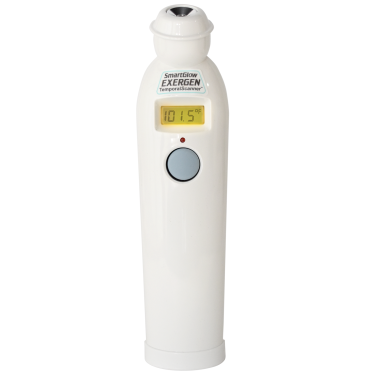
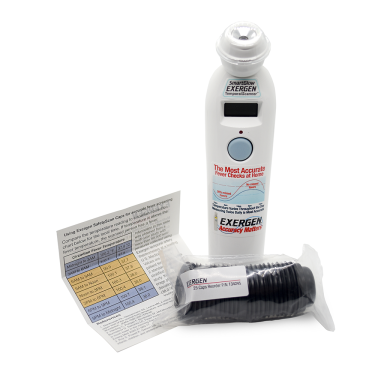
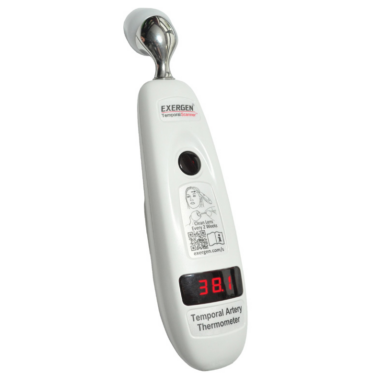
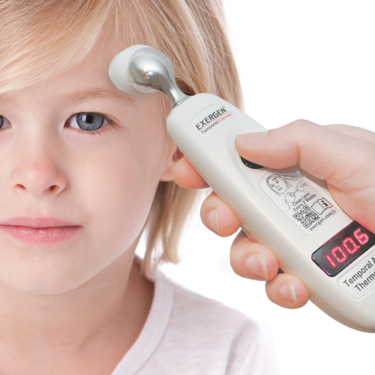
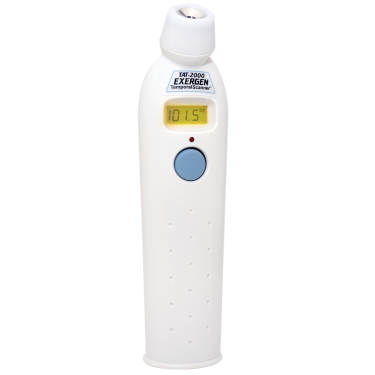
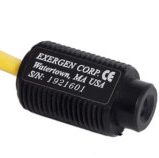
What remains constant is the importance of monitoring for fever. Early detection through regular temperature checks can be the first sign of illness and key to timely care. Exergen’s TempoTherm and TAT-2000C Temporal Artery Thermometers are designed with both patients and caregivers in mind. These clinically accurate, easy-to-use, non-invasive tools require just a soft swipe across the forehead to provide a fast and accurate reading.
Masks, air filtration, vaccination are vital. As this year’s respiratory illness season unfolds, staying vigilant is crucial to staying healthy.
Sources:
- Becker’s Hospital Review, https://www.beckershospitalreview.com/pharmacy/uncertainty-on-covid-vaccine-access-looms-ahead-of-virus-season/
Exergen P/N 850570
