
Chikungunya originated in Africa around 500 years ago and has since spread globally, with periodic outbreaks in regions where Aedes mosquitoes thrive, especially where climate, urbanization, and travel promote breeding and transmission. It is primarily found in tropical and subtropical areas, with cases reported in over 110 countries across Asia, Africa, the Americas, and parts of Europe. Its distribution is closely linked to the presence of Aedes aegypti and Aedes albopictus, the mosquitoes that transmit the virus. Climate change and globalization may expand the mosquito habitat, increasing the risk in previously unaffected areas.
Currently,China is experiencing a chikungunya outbreak of note this is their biggest outbreak ever and it has reached epidemic level.In the U.K., cases have doubled to 73 people up from 27 in the same span of time in 2024, a 170% increase in cases. In addition, some countries are warning travelers about an outbreak in Brazil. Other affected regions include:
- Tropical and subtropical countries in Africa and Asia (e.g., India, Sri Lanka, Thailand, Bangladesh, Cambodia).
- Many countries in the Americas and the Caribbean, including Brazil, which frequently reports the highest number of cases.
- Some parts of Europe, notably Italy and France, have seen outbreaks due to the presence of Aedes albopictus mosquitoes.
- Indian Ocean islands such as Mauritius and Réunion have also experienced outbreaks.
What is Chikungunya?
This virus is transmitted by Aedes mosquitoes. It does not spread from person to person, but if a mosquito bites someone who’s infected, it can pick up the virus and pass it to others. According to the Cleveland Clinic, fever and joint pain generally occur within three to seven days of being bitten.
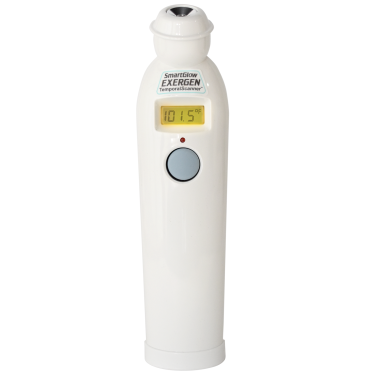
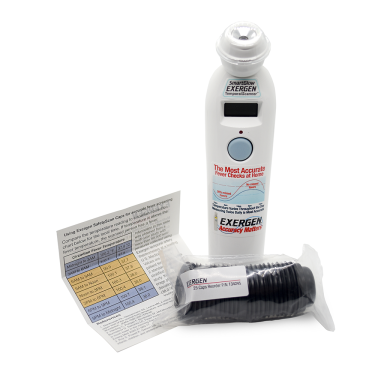
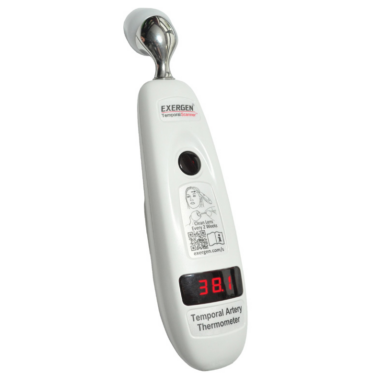
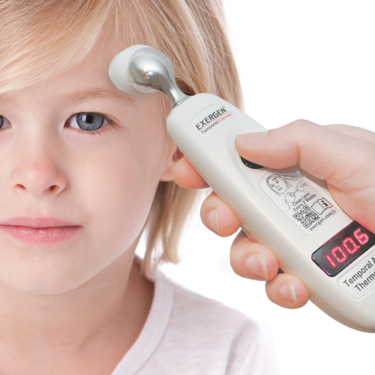
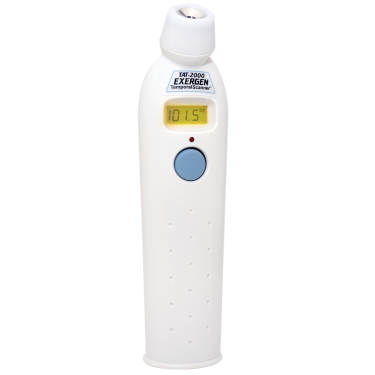
Some people experience severe joint pain (hence the name “chikungunya,” which means “to become contorted” in reference to the posture pain can cause), but some may have headaches, rashes, muscle aches, or fatigue. Since fever is one of the first symptoms, regular temperature checks are important. Using a reliable thermometer like Exergen’s award-winning and FDA approved Temporal Artery Thermometer that is widely used in hospitals, clinics and at home because it offers highly accurate readings all with a simple swipe across the forehead by gently touching it.
Most people recover in about a week, though joint pain can linger. Older adults, newborns, and people with health conditions like heart disease or diabetes are more likely to experience complications.
There’s no cure, but rest, fluids, and acetaminophen can ease the symptoms. Prevention is key. Wearing insect repellent, covering exposed skin, and removing standing water can help reduce exposure to mosquitos. In late 2023, the FDA approved IXCHIQ a vaccine that is currently available for high-risk adults.
Chikungunya is not a household name, but with outbreaks emerging around the world, including in parts of China, awareness and prevention are the best defense. In these uncertain times, staying vigilant about your health is essential.
Sources,
- Cleveland Clinic, https://my.clevelandclinic.org/health/diseases/25083-chikungunya
- NPR, https://www.npr.org/sections/goats-and-soda/2025/08/08/g-s1-81670/china-chikungunya-virus-mosquitoes
EXERGEN P/N 850526
