
Kawasaki disease, also known as mucocutaneous lymph node syndrome, is a rare inflammatory illness that primarily affects young children, causing swelling in the walls of small and medium-sized blood vessels throughout the body. This inflammation can lead to complications involving the heart arteries vessels that carry oxygen-rich blood to the heart muscle. Early recognition and treatment often lead to full recovery with no lasting effects.
While its exact cause remains unknown, medical experts believe it may be triggered by a combination of genetic and environmental factors. Importantly, the disease is not contagious.
Around the World
Kawasaki disease is recognized worldwide, though its prevalence varies greatly by region. Japan reports the highest incidence, with about 264–371 cases per 100,000 children under age five. In South Korea, that number ranges from 134–200 per 100,000, and in Taiwan, around 69–83 per 100,000.
In the United States, roughly 6,000–7,000 children are diagnosed each year that’s about 17–25 cases per 100,000 children under five. The numbers are significantly higher among children of Asian or Pacific Islander descent, especially those living in Hawaii, where incidence can reach 50–210 per 100,000. Europe and Australia report lower rates, typically 5–22 per 100,000 in the same age group.
Fortunately, mortality is extremely low. In Japan, where awareness and early treatment are high, the fatality rate is less than 0.02%, and the rate of serious heart complications drops from 25% untreated to under 4% with timely medical care.
Who is at Risk?
While Kawasaki disease can affect any child, several risk factors increase susceptibility:
- Age: Most cases occur in children under 5 years old.
- Ethnicity: Children of Asian or Pacific Islander descent, particularly Japanese, Korean, and Taiwanese ancestry, have the highest risk.
- Genetic factors: Siblings of affected children have a 10–20 times higher risk.
- Seasonal trends: The illness tends to appear more often in winter and early spring in temperate climates.
Symptoms
Symptoms develop in stages and may not appear at all at once. A persistent fever (over 102.2°F or 39°C) that lasts more than five days is a key sign. Along with fever these symptoms might be present:
- A rash on the torso or genital area
- Enlarged lymph node in the neck
- Very red eyes without thick discharge
- Red, cracked lips and a “strawberry” tongue
- Swelling and redness of the hands and feet, followed by peeling skin on fingers and toes
Other symptoms include stomach pain, diarrhea, vomiting, fussiness, or joint pain. Even if symptoms improve, it’s important to inform a healthcare provider as some may develop incomplete Kawasaki disease, which still carries heart risks.
Diagnosis and Treatment
There is no test for Kawasaki disease. Diagnosis relies on clinical examinations and tests that rule out other illnesses such as scarlet fever, measles, or toxic shock syndrome.
Tests might includer:
- Blood tests to detect inflammation or anemia
- Electrocardiogram (EKG) to assess heart rhythm
- Echocardiogram to check for heart artery swelling or damage
Treatment should begin within ten days of symptom onset to prevent lasting heart complications. Most children are treated in the hospital with:
- Intravenous immunoglobulin (IVIG): A protein that reduces inflammation and protects the arteries.
- Aspirin therapy: Used under medical supervision to reduce inflammation and prevent blood clots.
Children generally recover once treatment begins, though some may have their heart monitored by a pediatric cardiologist.
Prevention and When to Seek Care
The cause of Kawasaki disease is unknown and there is no proven way to prevent it. However, early recognition and treatment are the best defense against complications. Parents should contact a healthcare provider if a child has a fever lasting more than three days, especially if accompanied by rash, red eyes, or swollen hands or feet.
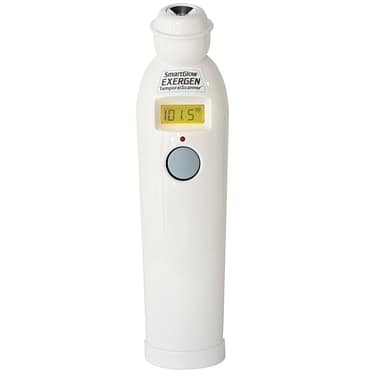
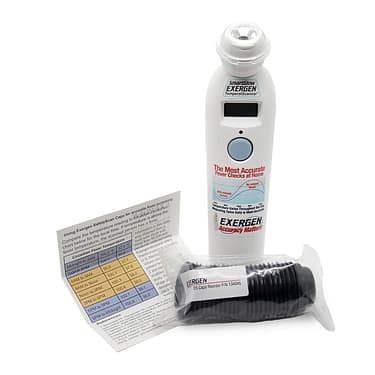
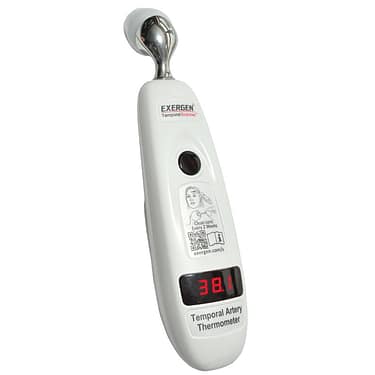
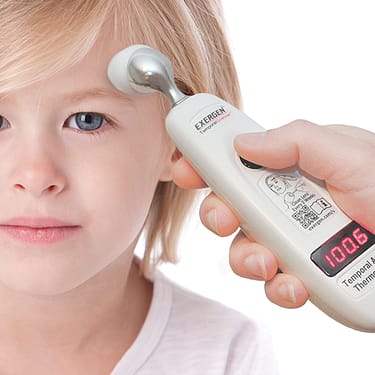
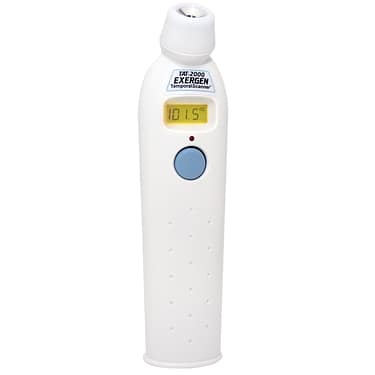
Since a lasting fever is sign of Kawasaki disease, having a fast, accurate thermometer at home helps you act early like Exergen’s FDA and CE approved Temporal Artery Thermometers like the TempoTherm or TAT-2000C are ideal. All it takes is a quick gentle swipe across the forehead scan to get an accurate reading in seconds. They’re non-invasive, kid-friendly, and trusted by healthcare professionals nationwide.
While Kawasaki disease is the leading cause of acquired heart disease in children in developed countries, medical advances have turned it into a treatable condition. Awareness and diligence remain the key to ensuring that children receive the care they need it.
Sources:
- Mayo Clinic, https://www.mayoclinic.org/diseases-conditions/kawasaki-disease/symptoms-causes/syc-20354598
- Phoenix children’s, https://phoenixchildrens.org/specialties-conditions/kawasaki-disease-children
Exergen P/N 850583
